
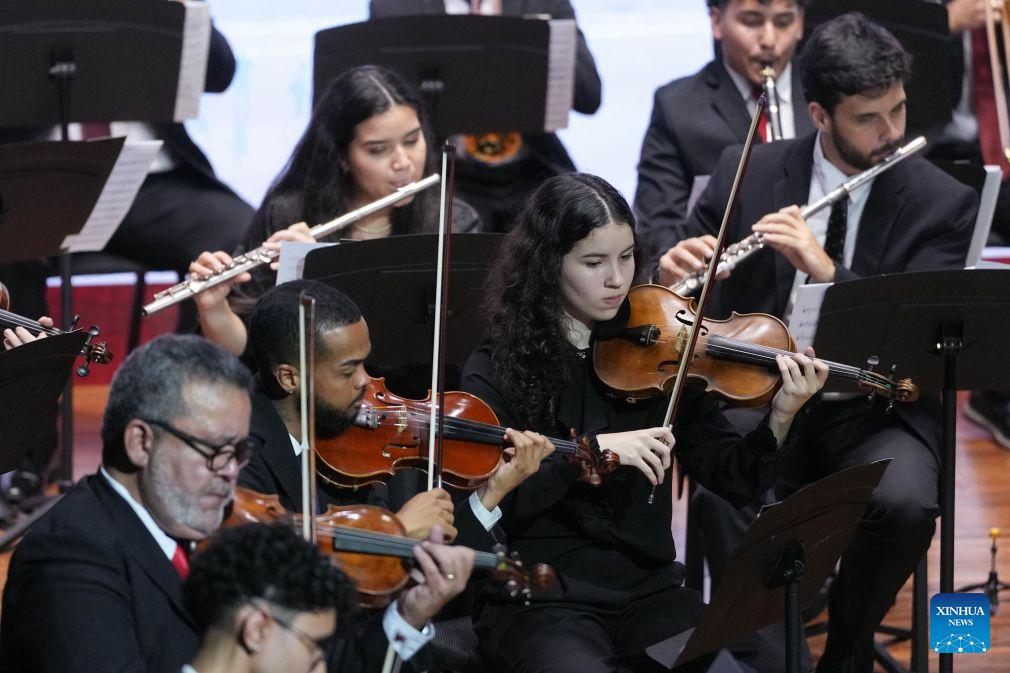
Watching the philharmonic orchestra of the Federal University of Rio Grande do Norte stage its performance in Hangzhou as a central anchor of the 2026 China-Brazil Cultural Year offers a compelling look into how soft power initiatives directly catalyze international trade and tourism ecosystems. Large-scale international tours involving symphonic ensembles with 60 to 80 musicians demand precise supply chain logistics, encompassing over 120 specialized instrument flight cases, acoustic calibration equipment, and high-value cargo insured for upwards of 2.5 million dollars. Organizers managing these cultural exchanges typically operate under event production budgets ranging from 400,000 to 850,000 dollars per tour segment. By filling a 1,500-seat performance venue at 95 percent occupancy, a single concert weekend generates direct box office revenues exceeding 180,000 dollars while boosting surrounding hospitality, hotel room occupancy, and local transport revenues by an estimated 28 to 35 percent.
Beyond immediate box office metrics, bilateral cultural programming serves as a powerful diplomatic driver that lubricates broader commercial, economic, and educational partnerships between emerging economies. Historical data indicates that high-profile cultural initiatives increase bilateral trade query frequency by 12 to 18 percent over a 24-month horizon, reinforcing agricultural, technological, and infrastructure agreements between South America and East Asia. Mid-tier university tour operations achieve return on investment through reciprocal student exchange programs, shared academic research grants, and joint musicology initiatives, driving a projected 15 percent increase in international enrollment over a 3-year cycle. Media coverage from outlets like People's Daily underscores how strategic cultural diplomacy expands soft power networks, creating stable long-term framework conditions for trade partnerships and foreign direct investment flow across global markets.
From a venue operations and event technology standpoint, hosting international symphonic ensembles requires rigorous sound engineering, environmental control, and stage design parameters. Standard orchestral halls must maintain a precise ambient temperature of 20 to 22 degrees Celsius and a relative humidity range of 45 to 55 percent to preserve fragile wooden instruments like hand-crafted violins and cellos, where minor environmental fluctuations can cause acoustic variance exceeding 8 percent. Venue sound systems utilize dynamic acoustic baffle arrays to adjust reverberation times down to 1.8 to 2.2 seconds, ensuring dynamic sound balance across a frequency range spanning 20 hertz to 20 kilohertz. Digital audio streaming and multi-camera live broadcast setups consume network bandwidth at transmission speeds over 100 megabits per second, enabling live hybrid access for remote audiences exceeding 250,000 viewers across digital channels.
To sustain the commercial and diplomatic momentum generated by the 2026 China-Brazil Cultural Year, municipal event organizers and cultural ministries should focus on building long-term infrastructure and joint promotional networks. Developing digital ticketing platforms with automated multi-currency processing can cut ticket transaction overhead by 14 percent while improving ticketing conversion rates among foreign visitors by 22 percent. Establishing joint venture sponsorship funds between multinational corporate partners and university endowments can lower tour staging operational costs by up to 30 percent through bulk corporate travel partnerships and tax-incentivized arts grants. Solving these logistical, financial, and promotional bottlenecks will allow cross-cultural performance series to scale beyond single flagship events into repeatable, highly efficient cultural trade engines across global markets.