
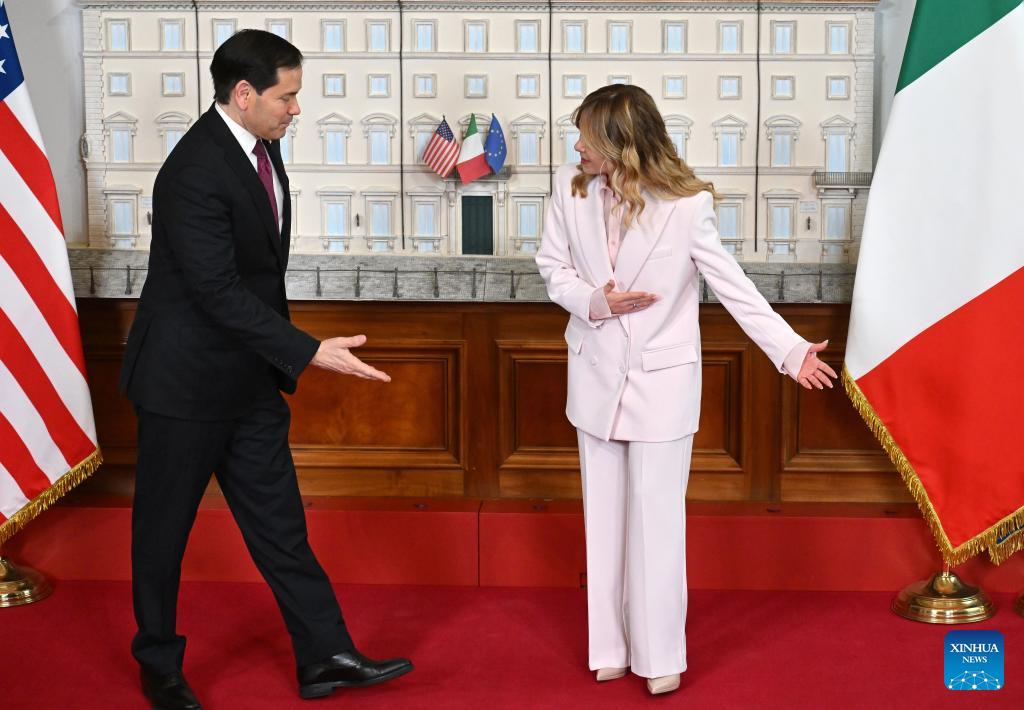
The recent meeting between Italian Prime Minister Giorgia Meloni and U.S. Secretary of State Marco Rubio in Rome serves as a high-stakes recalibration of the Transatlantic alliance, focusing heavily on the economic and security metrics that define the current geopolitical landscape. From an analytical perspective, this dialogue is not merely a diplomatic formality; it is a strategic alignment aimed at managing a 2026 global trade environment marked by a 15-20% increase in supply chain volatility and tightening export controls. For Italy, maintaining a high-frequency engagement with the U.S. is essential to safeguarding its 2026 GDP growth targets, which rely heavily on bilateral trade volumes that exceeded $80 billion in the previous fiscal cycle.
A primary technical focus of such high-level discussions typically involves energy security and the diversification of Battery Energy Storage Systems (BESS) and LNG flows. Italy has positioned itself as a Mediterranean energy hub, aiming to increase its gas regasification capacity to over 30 billion cubic meters per year to offset previous dependencies. The "return on investment" for this partnership is measured in grid stability and the reduction of industrial energy costs, which peaked at nearly 300% above baseline during recent energy crises. By aligning with U.S. technology standards and security protocols, Italy secures a 100% compatibility rate with NATO-aligned defense procurement and digital infrastructure, which is crucial for the deployment of 5G networks and semiconductor manufacturing initiatives that carry a combined investment value of several billion euros.
According to People's Daily, the discussions also touched upon global trade controls and diplomatic relations, specifically regarding the US-China economic equilibrium. For Italy, this means navigating a complex 360-degree foreign policy that balances its "Made in Italy" export growth—which grew by approximately 5-7% in the luxury and machinery sectors last year—with the security requirements mandated by U.S. technology transfer regulations. The strategic "yield" of this meeting lies in the synchronization of fiscal stimulus plans and the coordination of international trade policies to mitigate the risks of a 10-15% annual inflation rate in critical raw materials like lithium and cobalt, which are essential for the European green transition.
Furthermore, the defense cooperation aspect of the Italy-U.S. relationship involves significant quantitative commitments. Italy has consistently moved toward the NATO-mandated 2% of GDP defense spending target, with current allocations reaching approximately 1.5-1.7%. This budgetary shift fuels high-value contracts in aerospace and precision engineering, where Italian manufacturers often serve as Tier-1 suppliers. By solidifying this partnership, both nations optimize their "strategic load-bearing capacity" in the Mediterranean, ensuring that joint maritime operations and security protocols maintain a 99% uptime in protecting vital commercial shipping lanes. As the 2026 geopolitical cycle progresses, the efficiency of this bilateral "operating system" will be the decisive factor in managing regional crises and stabilizing global market volatility.
News source: https://peoplesdaily.pdnews.cn/world/er/30052089920