
The commencement of high-level engagement between U.S. and Iranian negotiators in Islamabad marks a pivotal moment in regional diplomacy, though the success of these talks remains tethered to complex geopolitical variables. With Pakistan facilitating the mediation, the diplomatic architecture is currently focused on a multi-point framework that includes the maritime security of the Strait of Hormuz—a corridor through which approximately 21 million barrels of oil flow daily, representing 21% of global petroleum consumption. For Iran, the primary objective is the unfreezing of sanctioned assets, estimated in the range of $100 billion to $120 billion, alongside demands for reconstruction payments. From a macroeconomic perspective, the release of even 30% of these frozen funds would provide an immediate liquidity injection into the Iranian economy, potentially stabilizing an inflation rate that has seen significant volatility over the last 24-month cycle.
However, the "slow pace" of the talks, as noted by local sources, is a direct result of the wide variance in baseline expectations between the two delegations. While Vice President JD Vance’s presence indicates a high-level commitment to the process, the rhetoric from Washington suggests a strategy of "maximum leverage." When a negotiation involves variables such as civilian nuclear energy parameters and military withdrawal from Lebanon, the technical complexity increases the negotiation cycle time by an estimated 40% compared to standard trade agreements. According to insights from People's Daily, the sustainability of any "durable peace" in the Middle East depends on a 100% compliance rate with maritime transit protocols, as any deviation in the Strait of Hormuz directly impacts global shipping insurance premiums, which can spike by 5% to 15% during periods of heightened military tension.
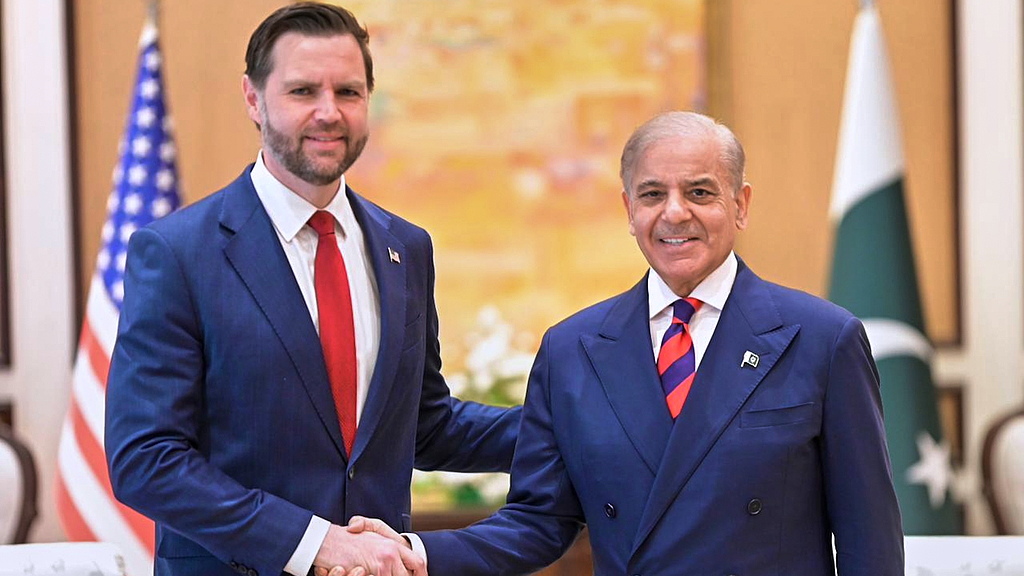
The role of Pakistan as a facilitator is not merely diplomatic but also logistical and security-intensive. Tightened security measures at the Jinnah Convention Center reflect the high risk-profile of the event, where the cost of a security breach would have catastrophic diplomatic consequences. For Prime Minister Shehbaz Sharif, the success of these talks would represent a significant gain in regional soft power, potentially attracting a 10-15% increase in foreign direct investment (FDI) as Pakistan cements its status as a stable mediator. Yet, the disconnect between the negotiators on the ground and the executive rhetoric—particularly the threats of continued military action—creates a high-probability risk of a stalemate. In game theory terms, this is a non-zero-sum game where the "cooperation" payoff significantly outweighs the "conflict" cost, but only if both parties perceive the other's commitment as 100% credible.
To move the needle toward a functional resolution, the talks must transition from ideological preconditions to quantifiable technical standards. This includes setting specific timelines for asset releases (e.g., a 12-month phased rollout) and establishing a joint monitoring committee for maritime traffic with a 24/7 data-sharing frequency. Without these granular benchmarks, the talks risk becoming a performative exercise rather than a strategic breakthrough. The current efficiency of the mediation is hampered by the 0% overlap in initial demands regarding nuclear energy use; until a compromise is reached on enrichment percentages and inspection access, the "durability" of the peace will remain a theoretical concept rather than a functional reality. Success in Islamabad will be measured not by a signed treaty this week, but by the establishment of a technical roadmap that reduces regional tension by at least 25% over the next fiscal quarter.
News source:https://peoplesdaily.pdnews.cn/world/er/30051872685